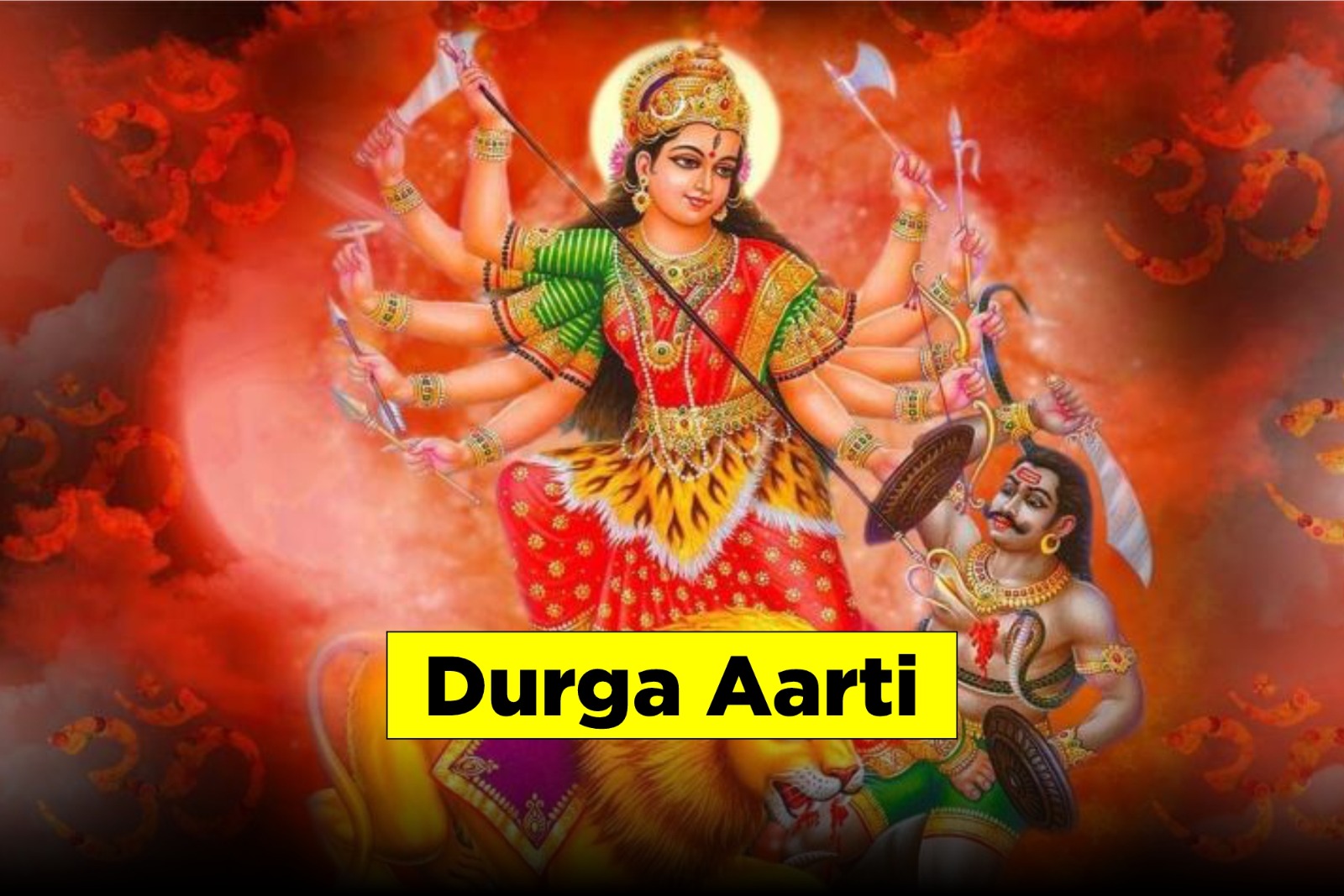
Durga Aarti - दुर्गा आरती दुर्गे दुर्घट भारी तुजविण संसारि । अनाथ नाथे आम्हे करुणाविस्तारी । वारी वारी जन्म मरणाचे वारी । हारी पडलो आता संकट निवारी ॥ १ ॥ जय देवी जय देवी महिषासुरमथिनी सुरवर ईश्वर वरदे तारकसंजिवनी ॥ धृ ॥ तुजविण भुवनी पाहता तुज ऐसे नाही चारी श्रम परंतु न बोले काही साही विवेक करीत पडे प्रवाही ते तू भक्तालागी पावसी लवकरी ॥ २ ॥ प्रसन्न वदने प्रसन्न होसी निजदासा क्लेशोपशमनी सौख्य तोडी भवपासा आम्हां गरीबां वर कृपाळू नेत्रांसा नरहरी तल्लीन झाला पदपंकजां ॥ ३ ॥ Durga Aarti Durge durghat bhaari tujavin sansaari Anaath naathe aamhe karunaavistaari Vaari vaari janma maranaache vaari Haari padalo aata sankat nivaari ॥1॥ Jaya Devi Jaya Devi Mahishaasura-mathini Suravar Ishvar varade taaraka-sanjivani ॥ धृ ॥ Tujavin bhuvani paahata tuj aise naahi Chaari shram parantu na bole kaahi Saahi vivek karit pade pravaahi Te tu bhakta-laagi paavasi lavakari ॥2॥ Prasanna vadane prasanna hosi nijadaasa Kleshopashamani saukhya todi bhava-paasa Aamha garibaan var krupalu netraansa Narhari tallin jhaala pad-pankajaan ॥3॥
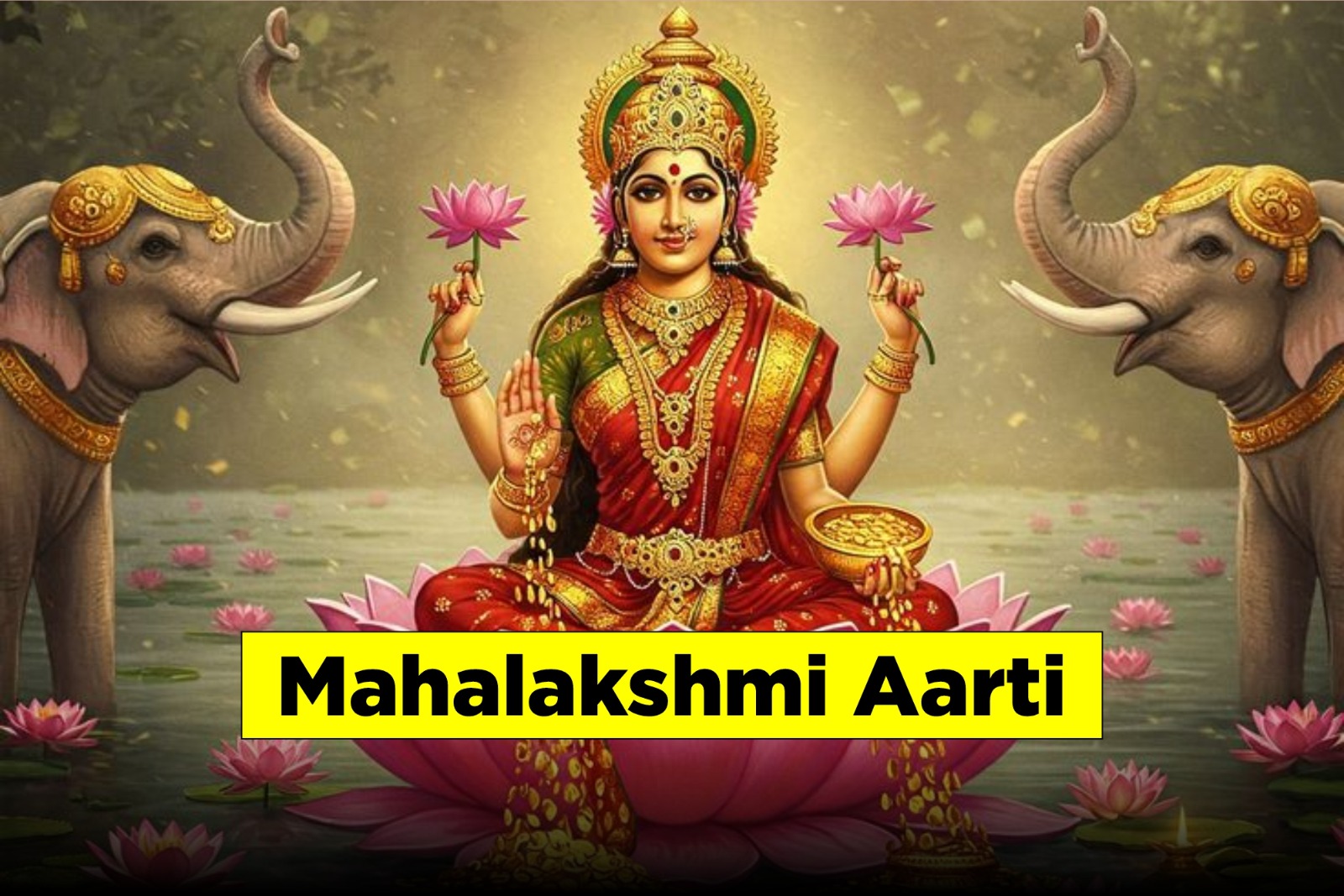
आरती महालक्ष्मीची - Mahalakshmi Aarti जय देवी जय देवी जय महालक्ष्मी। वससी व्यापकरुपे तू स्थूलसूक्ष्मी॥ करवीरपुरवासिनी सुरवरमुनिमाता। पुरहरवरदायिनी मुरहरप्रियकान्ता। कमलाकारें जठरी जन्मविला धाता। सहस्रवदनी भूधर न पुरे गुण गातां॥ जय देवी जय देवी...॥ मातुलिंग गदा खेटक रविकिरणीं। झळके हाटकवाटी पीयुषरसपाणी। माणिकरसना सुरंगवसना मृगनयनी। शशिकरवदना राजस मदनाची जननी॥ जय देवी जय देवी...॥ तारा शक्ति अगम्या शिवभजकां गौरी। सांख्य म्हणती प्रकृती निर्गुण निर्धारी। गायत्री निजबीजा निगमागम सारी। प्रगटे पद्मावती निजधर्माचारी॥ जय देवी जय देवी...॥ अमृतभरिते सरिते अघदुरितें वारीं। मारी दुर्घट असुरां भवदुस्तर तारीं। वारी मायापटल प्रणमत परिवारी। हें रुप चिद्रूप दावी निर्धारी॥ जय देवी जय देवी...॥ चतुराननें कुश्चित कर्मांच्या ओळी। लिहिल्या असतिल माते माझे निजभाळी। पुसोनि चरणातळी पदसुमने क्षाळी। मुक्तेश्वर नागर क्षीरसागरबाळी॥ जय देवी जय देवी...॥ Mahalakshmi Aarti Jai Devi Jai Devi Jai Mahalakshmi। Vasasi Vyapakarupe Tu Sthulasukshmi॥ Karvirpurvasini Survarmunimata। Puraharavaradayini Muraharapriyakanta। Kamalakare Jathari Janmavila Dhata। Sahasravadani Bhudhara Na Pure Guna Gata॥ Jai Devi Jai Devi...॥ Matulinga Gada Khetaka Ravikirani। Jhalake Hatakavati Piyusharasapani। Manikarasana Surangavasana Mriganayani। Shashikaravadana Rajasa Madanachi Janani॥ Jai Devi Jai Devi...॥ Tara Shakti Agamya Shivabhajaka Gauri। Sankhya Mhanati Prakriti Nirguna Nirdhari। Gayatri Nijabija Nigamagama Sari। Pragate Padmavati Nijadharmachari॥ Jai Devi Jai Devi...॥ Amritabharite Sarite Aghadurite Vari। Mari Durghata Asura Bhavadustara Tari। Vari Mayapatala Pranamata Parivari। He Rupa Chidrupa Davi Nirdhari॥ Jai Devi Jai Devi...॥ Chaturanane Kushchita Karmanchya Oli। Lihilya Asatila Mate Majhe Nijabhali। Pusoni Charanatali Padasumane Kshali। Mukteshwara Nagara Kshirasagarabali॥ Jai Devi Jai Devi...॥
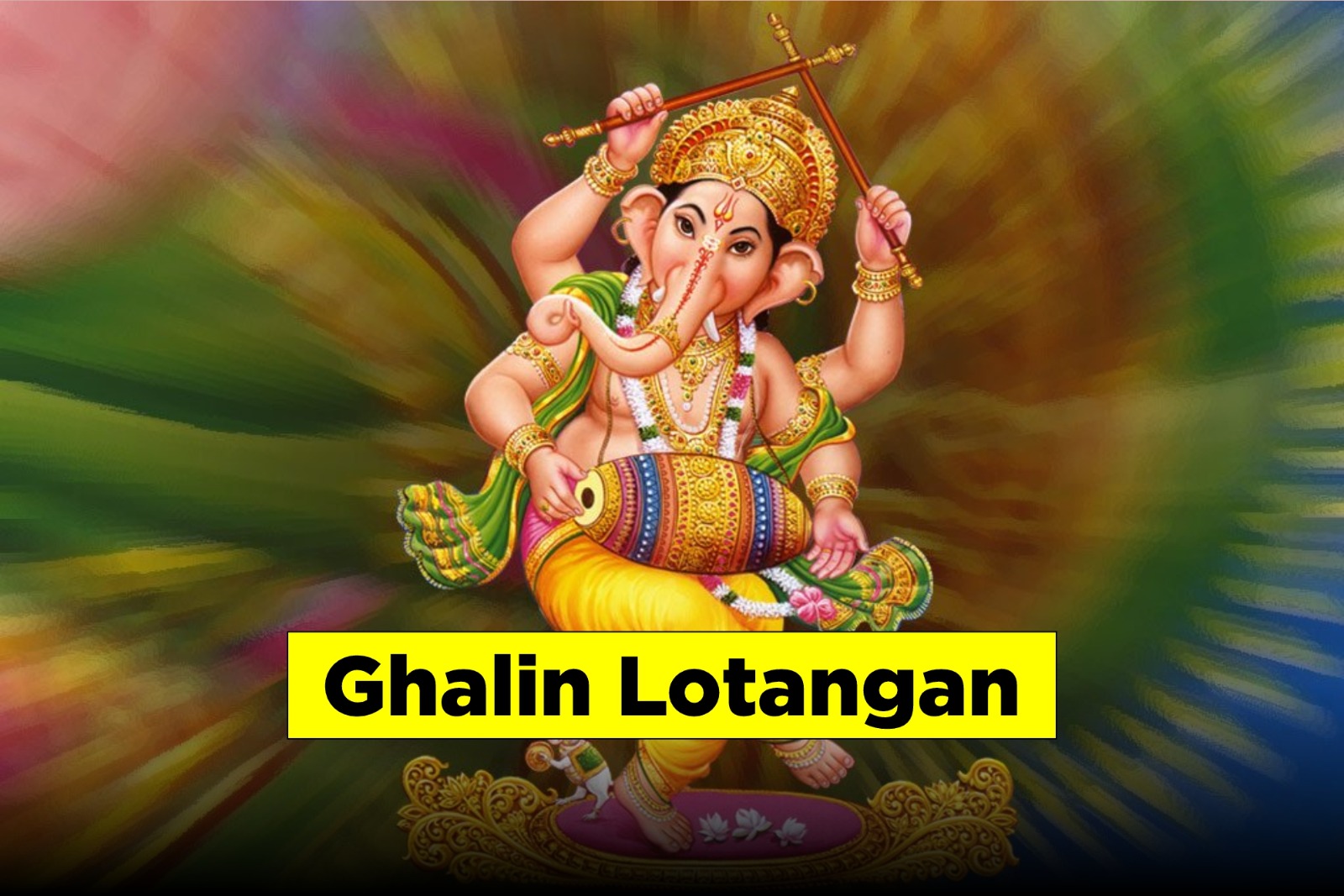
घालिन लोटांगण - Ghalin lotangan घालिन लोटांगण वंदीन चरण । डोळ्यांनी पाहिन रुप तुझे । प्रेमे आलिंगन आनन्द पूजन । भावे ओवाळीन म्हणे नामा ॥ त्वमेव माता पिता त्वमेव त्वमेव बंधू सखा त्वमेव । त्वमेव विद्या द्रविणं त्वमेव त्वमेव सर्वं मम देवदेव ॥ कायेन वाचा मनसेंद्रियैर्वा बुद्ध्यात्मना वा प्रकृतिस्वभावात् । करोमि यद्यत्सकलं परस्मै नारायणायेति समर्पयामि ॥ अजुन्यं केशवं राम नारायणं । कृष्णदामोदर वासुदेवं भजे ॥ श्रीधरं माधवं गोपिकावल्लभं । जानकीनायकं रामचंद्रं भजे ॥ हरे राम हरे राम राम राम हरे हरे हरे कृष्ण हरे कृष्ण कृष्ण कृष्ण हरे हरे || मंगलमूर्ती मोरया || || गणपतिबाप्पा मोरया || Ghalin Lotangan Ghalin lotangan vandin charana Dolyani pahin rup tujhe Preme alingan anande pujin Bhave ovaleen mhane nama Twameva mata cha Pita twameva Twameva bandhusch sakha twameva Twameva Vidhya dravinam twameva Twameva sarwam mam deva deva Kayena vacha manasendriyenva Buddhayatmna va prakrutiswabhavat Karomi yadhyat sakalam parasmai Narayanayeti samarpayami Achyutam keshavam ramnarayanam krushanadamodaram vasudevam hari Shridharam Madhavam gopikavallabham Janaki nayakam ramchandra bhaje Hare Ram Hare Ram Ram Ram Hare Hare Hare Krishna Hare Krishna Krishna Krishna Hare Hare || Mangalamurthy Morya || || Ganpati Bappa Morya ||
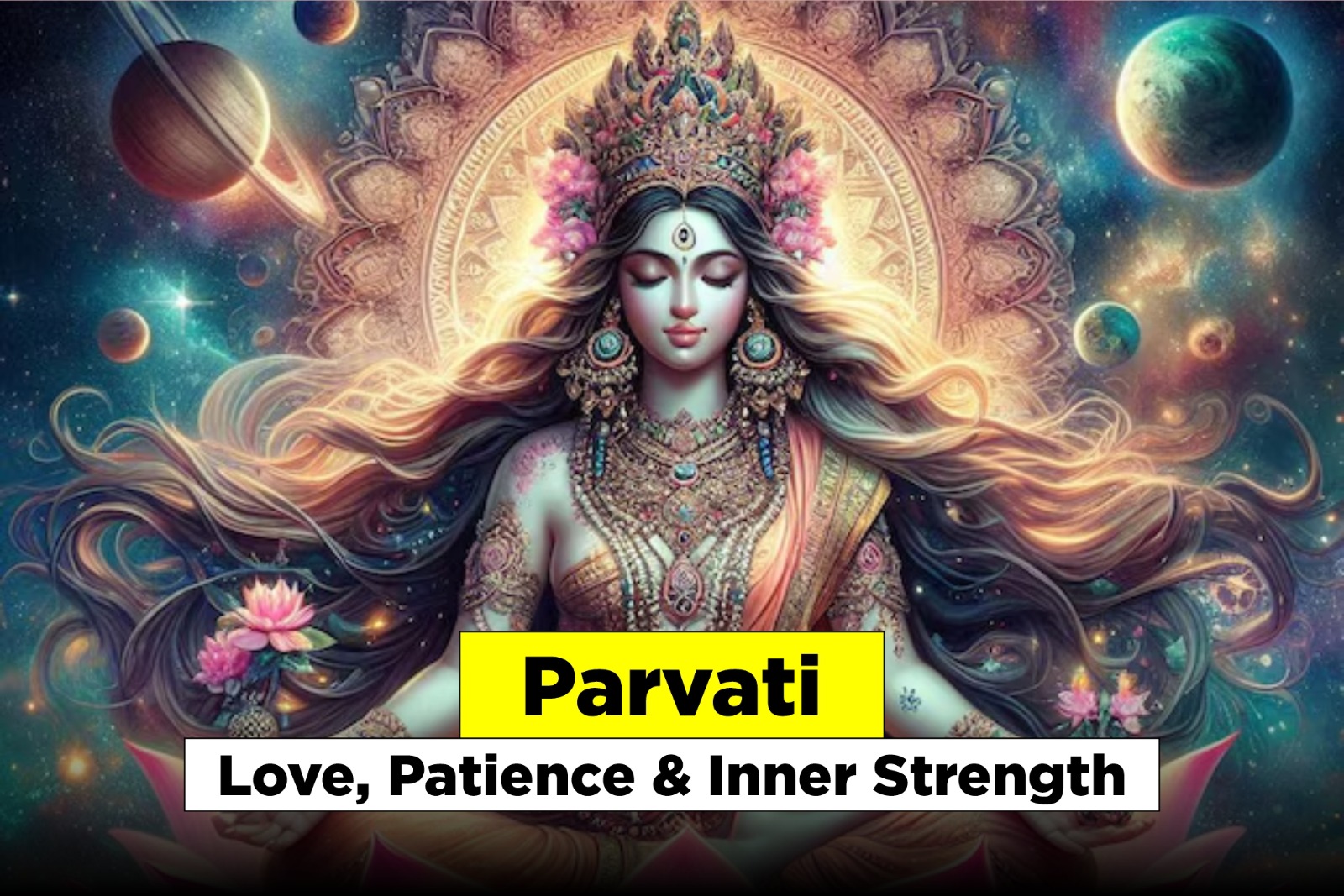
Parvati – Love, Patience, and Inner Strengt Parvati – Love, Patience, and Inner Strength : Devi Parvati is the loving wife of Lord Shiva and the gentle mother of Ganesha and Kartikeya. But she is not just a divine mother. She is Shakti — the very source of strength, transformation, and resilience in the universe. Where Shiva represents stillness and detachment, Parvati represents life itself — soft, flowing, and deeply powerful. From Sati to Parvati – A Journey of Rebirth Her story begins as Sati, who immolated herself out of pain and dignity. But even fire couldn’t consume her spirit. She returned as Parvati — born with the sole purpose of uniting with Shiva again, but this time with even more strength and wisdom. This isn’t just a myth — it’s a message: Even when life burns us down, we can rise again, stronger. Parvati's story is every woman’s story — of sacrifice, love, waiting, and finally, transformation. Tapasya – The Power of Devotion Parvati’s deep meditation (tapasyā) to win Shiva’s love is legendary. She left behind royalty, comfort, and everything else — just to prove that true love is not about asking, but about becoming worthy of the divine. In a world full of quick fixes and instant results, Parvati teaches us patience. Her silence had power. Her faith had energy. And her love had the strength to melt even the coldest yogi’s heart. The Forms of Devi Parvati Devi Parvati is a goddess of many manifestations: Annapurna – The goddess of food and nourishment. Durga – The warrior who protects from evil. Kali – The deity beyond time, who tears through ego. Meenakshi, Kamakshi, Lalita – Forms of grace and power. Gauri – The gentle, radiant form of purity and harmony. She shows us that a woman can be calm like the moon or fiery like the sun — and still be divine in both forms. Final Thoughts Devi Parvati is the Shakti which flows from everyone to everywhere. She is the mother who can forgive, the wife who will wait, the warrior who protects, and the yogini who transforms. In moments of patience, in every act of unconditional love, and the step we take towards truth — Devi Parvati lives. So next time you feel weak, remember — even the bhagwan Shiva needed Devi Parvati to feel complete. That is the Shakti. Om Parvatyai Namah. Har Har Mahadev!
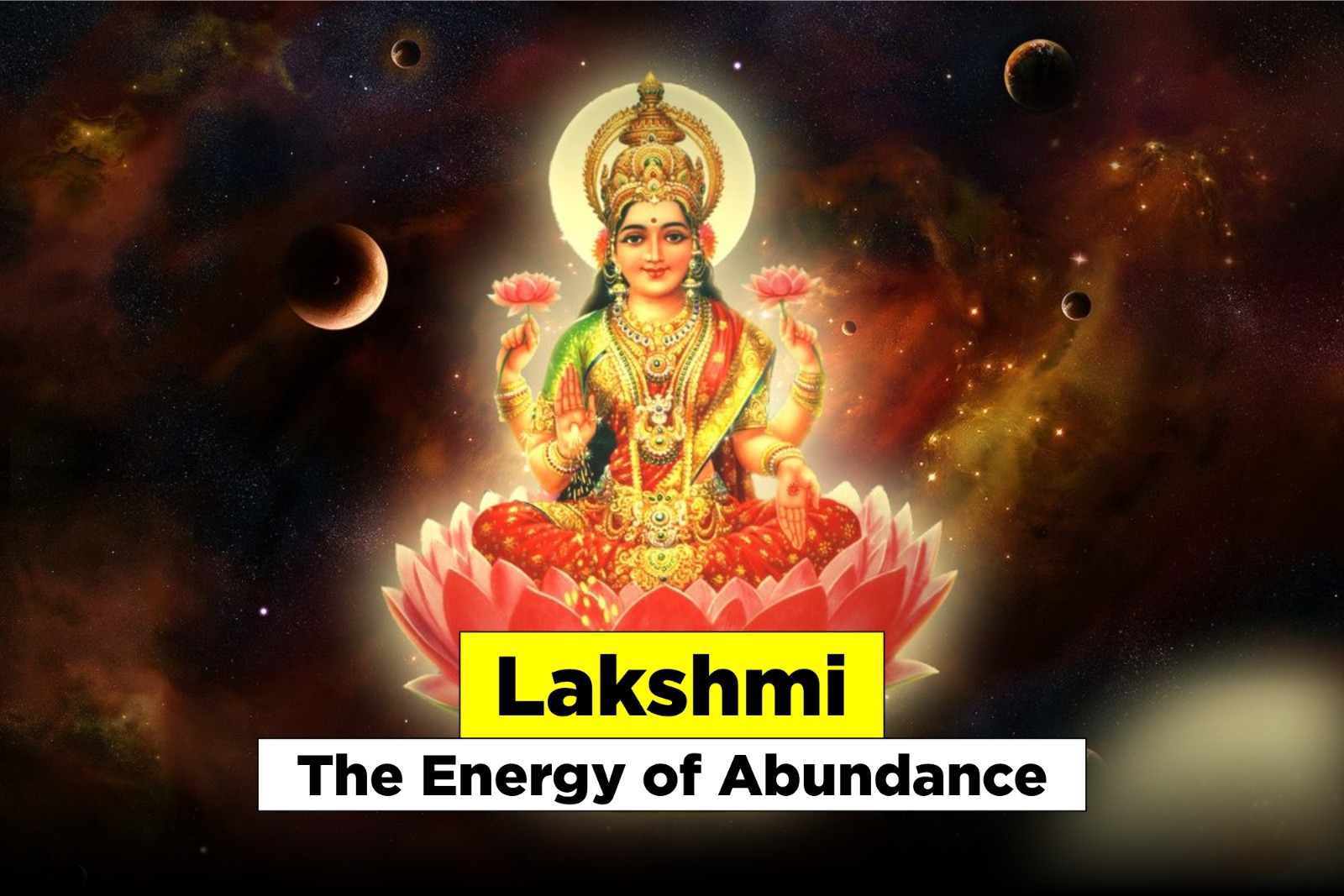
Lakshmi – The Energy of Abundance Lakshmi – The Energy of Abundance : Goddess Lakshmi, a golden figure seated on a lotus, coins flowing from her palm, surrounded by elephants and light we often imagine her like this. She is the goddess of wealth, yes — but not just the kind that fills pockets. Lakshmi is the one who fills life — with grace, fortune, beauty, and peace. She is not just the deity of dhan (money), but also of sampatti — the complete prosperity of the heart, home, and soul. Beyond Gold and Silver Many pray to Lakshmi during Diwali, hoping for money, success, or a new beginning. But real Lakshmi is far more subtle. She’s in the harmony of your home, the smile of a loved one, the opportunity that knocks when you least expect it. She’s in the timely help, the peace after prayer, and the food served with love. She is Chanchala — always moving, never staying in one place too long if not respected. That’s why in Indian culture, we are taught to keep our homes clean, our thoughts pure, and our hearts grateful — to make Lakshmi stay. Lakshmi as Shakti In reality, Lakshmi is Shakti — the divine feminine energy that creates, nourishes, and blesses. She works silently, but her impact is loud. A home where Devi Lakshmi resides isn't just rich — it's alive. Alive with joy, health, unity, and calmness. She comes not just through hard work, but also through good intentions, honesty, and dharma. That’s why she is always shown alongside Lord Vishnu, the preserver — because wealth should sustain, not destroy. The Eight Forms – Ashtalakshmi Lakshmi has many forms and each blessing a different aspect of life: Adi Lakshmi – Eternal wealth (spiritual strength) Dhana Lakshmi – Material wealth Dhanya Lakshmi – Abundance of food and health Gaja Lakshmi – Power and royal status Santana Lakshmi – Blessings of children Veera Lakshmi – Courage and strength Vijaya Lakshmi – Victory in life Vidya Lakshmi – Knowledge and learning Real prosperity is when all eight are in balance. Final Thoughts People think Lakshmi is something we earn — But she’s something we attract. By living life with gratitude, generosity, cleanliness, kindness and devotion, we open our lives to her divine presence. So next time you light a diya or offer a lotus at her feet, remember — Lakshmi isn’t outside you. She’s within you. All she asks is that you keep your heart clean and your intentions pure. Om Shreem Mahalakshmyai Namah
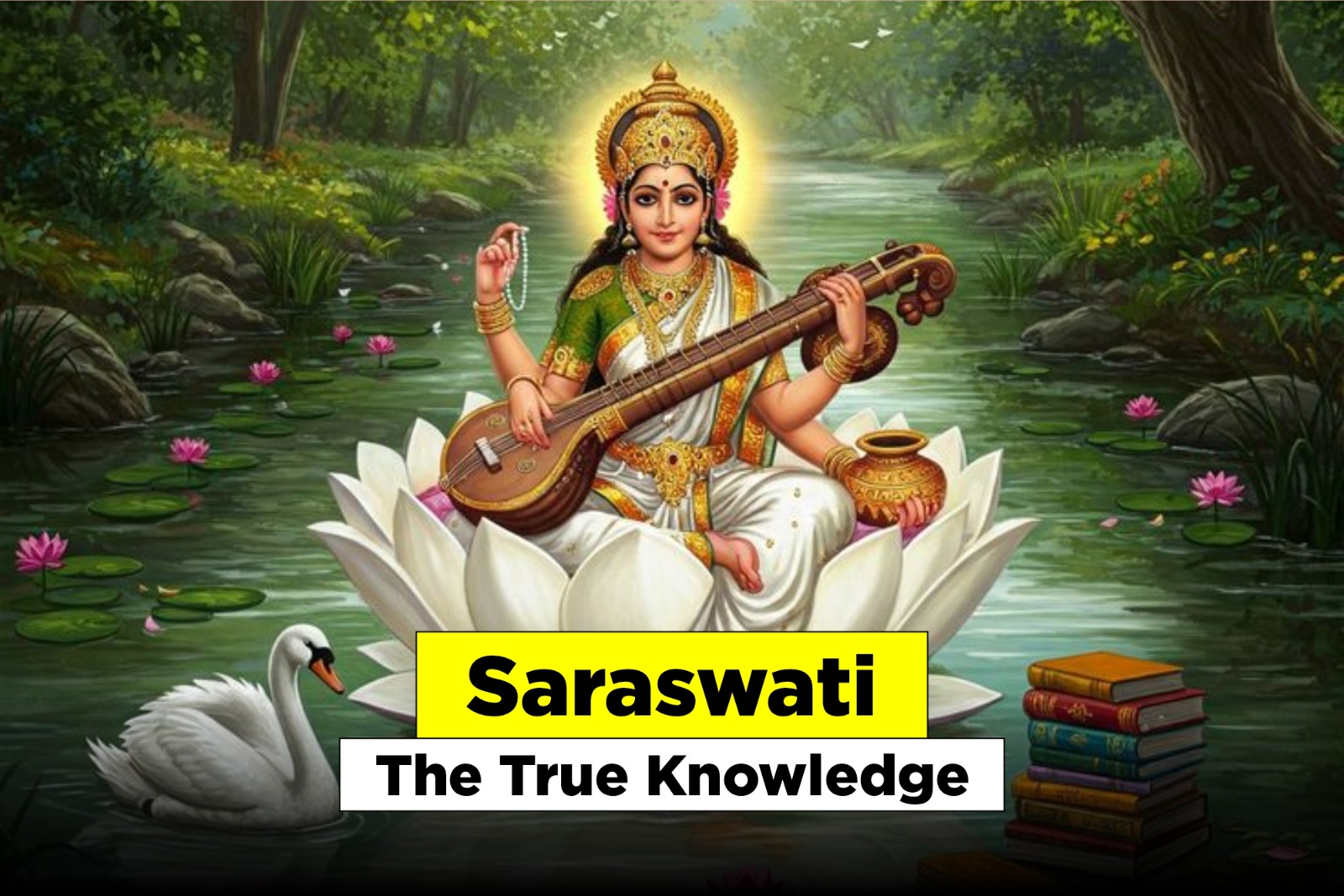
Saraswati – The True Knowledge Saraswati – The True Knowledge : In the quiet corners of temples, schools, and even hearts, the name Saraswati is softly uttered. She is not a goddess of celebrations or grand displays — she is the whisper of wisdom, the soft glow of understanding, the first learning of every child. Clad in white, seated on a lotus or a swan, holding the veena, scriptures, and a rosary — Goddess Saraswati represents purity, learning, arts, and speech. Where Lakshmi gives us wealth and Durga gives us power, Saraswati gifts us gyan — knowledge that lights up life from within. More Than Just Education We often limit Devi Saraswati to school prayers or exam-time offerings. But her presence is far beyond marks and textbooks. She is the inner wisdom that helps us choose right over easy, truth over illusion, humility over ego. Her blessings aren't just seen in grades, but in the grace with which a person speaks, creates, and lives. She resides in the voice of a singer, the brush of an artist, the silence of a meditating sage, and the words of a kind teacher. She is the reason we can think, speak, express, and evolve. The Power of Vani – Speech Saraswati is also the goddess of Vani (speech). In today’s digital world, words are everywhere. But she reminds us — choose your words with care. Speak with kindness. Let your words heal, not hurt. That’s true Saraswati in action. Why White? Her white clothes, white swan, and white lotus aren’t just for beauty. White is the color of purity and peace. Saraswati teaches us that knowledge must be pursued with a clean heart and calm mind — not just for success, but for wisdom. Final Thoughts In a world that’s loud with opinions but starving for wisdom, Saraswati’s grace is needed more than ever. May we not just learn, but understand. Not just speak, but uplift. Not just grow, but evolve. So whether you're picking up a book, creating something new, or just sitting in silence — remember, if your intention is pure, Maa Saraswati is already with you. “सरस्वतीं च तां नौमि वागधिष्ठातृदेवताम् । या वीणावरदण्डमण्डित करा या श्वेत पद्मासना । सा मां पातु सरस्वती भगवती निःशेषजाड्यापहा।। सरस्वति नमस्तुभ्यं वरदे कामरूपिणि…” Let her blessings flow through your thoughts, your words, and your life.
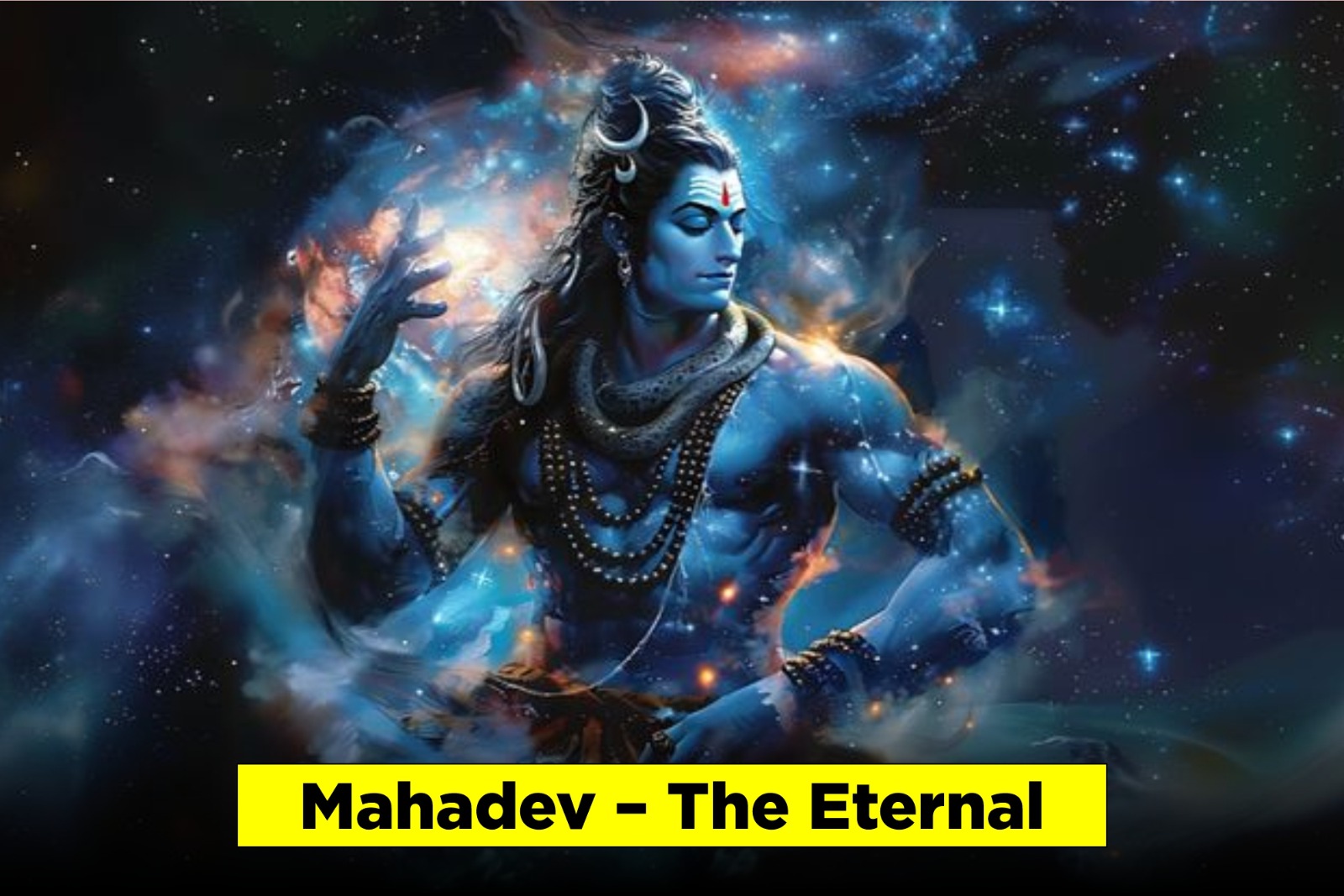
Mahadev – The Eternal Mahadev – The Eternal : The name Mahadev there’s something in it the moment we hear it, a wave of calm, strength, and surrender washes over us. Bhagwan Shiva — the destroyer, the yogi, the cosmic dancer — he isn’t just a deity; he’s a feeling, a force, a way of life. where you see other gods adorned in gold and ornaments, Mahadev sits in quiet meditation, smeared in ash, with matted hair and a snake coiled around his neck. He doesn’t demand devotion — he accepts it in the most raw, unfiltered form. Whether you're rich or poor, a sinner or a saint, Mahadev’s doors are always open. That’s what makes him Bholenath, the innocent one. The Silence of Shiva Shiva doesn’t play with words. His silence speaks louder. He shows us that true power lies in knowing when to act and when to simply be. While others may chase the world, Shiva teaches detachment. Not to reject life, but rising above it. Today's modern life is filled with distractions and we often lose our connection to the divine. But when you chant “Om Namah Shivaya”, or simply close our eyes at least for a moment, it can remind us — peace is always within reach. Destruction That Leads to Renewal Many fear Shiva as the god of destruction. But destruction isn’t always a bad thing. Sometimes, we need to break — break habits, break egos, break attachments — to grow. Shiva clears the old, to make space for the new. Just like how trees shed leaves in autumn to bloom in spring. Devotion in Simplicity A bilva leaf, a few drops of water, and a heart full of devotion — that’s all it takes to please Mahadev. He doesn’t ask for grand rituals. He looks at the bhav (feeling), not the bahar (show). That's why millions connect with him so easily — because he meets us where we are. Final Thoughts In a world that constantly tells us to “do more, be more,” Mahadev whispers something different: “Be still, be aware, be free.” Whether you’re seeking strength, peace, love, or truth — look within. That’s where Mahadev lives. Har Har Mahadev!
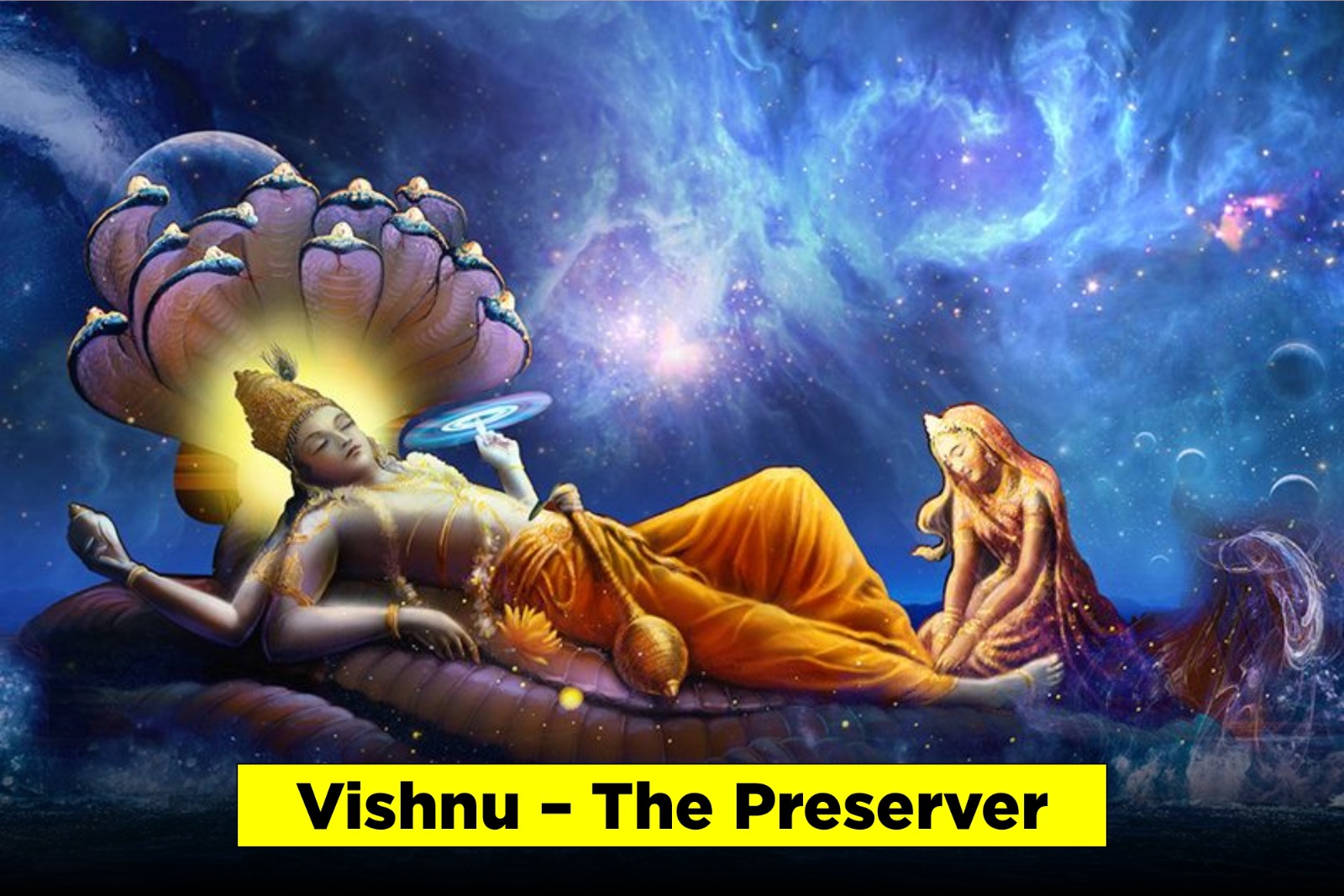
Vishnu – The Preserver Vishnu – The Preserver : Bhagwan Vishnu balances the force that keeps the cosmos running smoothly. While Brahma creates and Shiva dissolves, it is Vishnu who preserves. He is the divine caretaker — ensuring harmony, justice, and order in the universe. Who is Vishnu? Lord Vishnu is often pictured resting on the serpent Ananta (endless), floating on the shir Sagara (cosmic ocean). With Lakshmi, the goddess of wealth, seated at his feet, he watches over the universe with compassion. He holds in his four hands: Shankha – the sound of creation (Om) Chakra – for cutting down evil Gada – representing strength Padma (lotus) – symbol of purity and beauty Vishnu’s Avatars – Whenever the balance of good and evil is disturbed, Vishnu takes an avatar (incarnation) to restore dharma. Some key ones include: Matsya – saves the first man from a great flood Rama – ideal king, from the Ramayana Krishna – A divine friend, guide, and philosopher from the Mahabharata Narasimha – half-man, half-lion form who destroys tyranny The final avatar, Kalki, is yet to come – to end the current age of darkness (Kali Yuga) and restart the cycle of time. Bhangwan Vishnu in Daily Life Worship of bhagwan Vishnu is deeply rooted in Indian culture.chants like the Vishnu Sahasranama, and simple acts of dharma (kindness, truth, duty) all honor him. Vaishnavism, is the tradition that worships bhagwan Vishnu as the Supreme God, teaches that surrender to him brings peace and liberation (moksha). The Gentle Power of Protection-What makes Vishnu special is his approach to power — not by dominance, but by balance, wisdom, and love. He teaches us that strength lies in patience, protection, and preserving what is good. Whether as Krishna guiding Arjuna, or as Vithoba standing with his devotees, Vishnu reminds us that divine help always arrives — right on time.
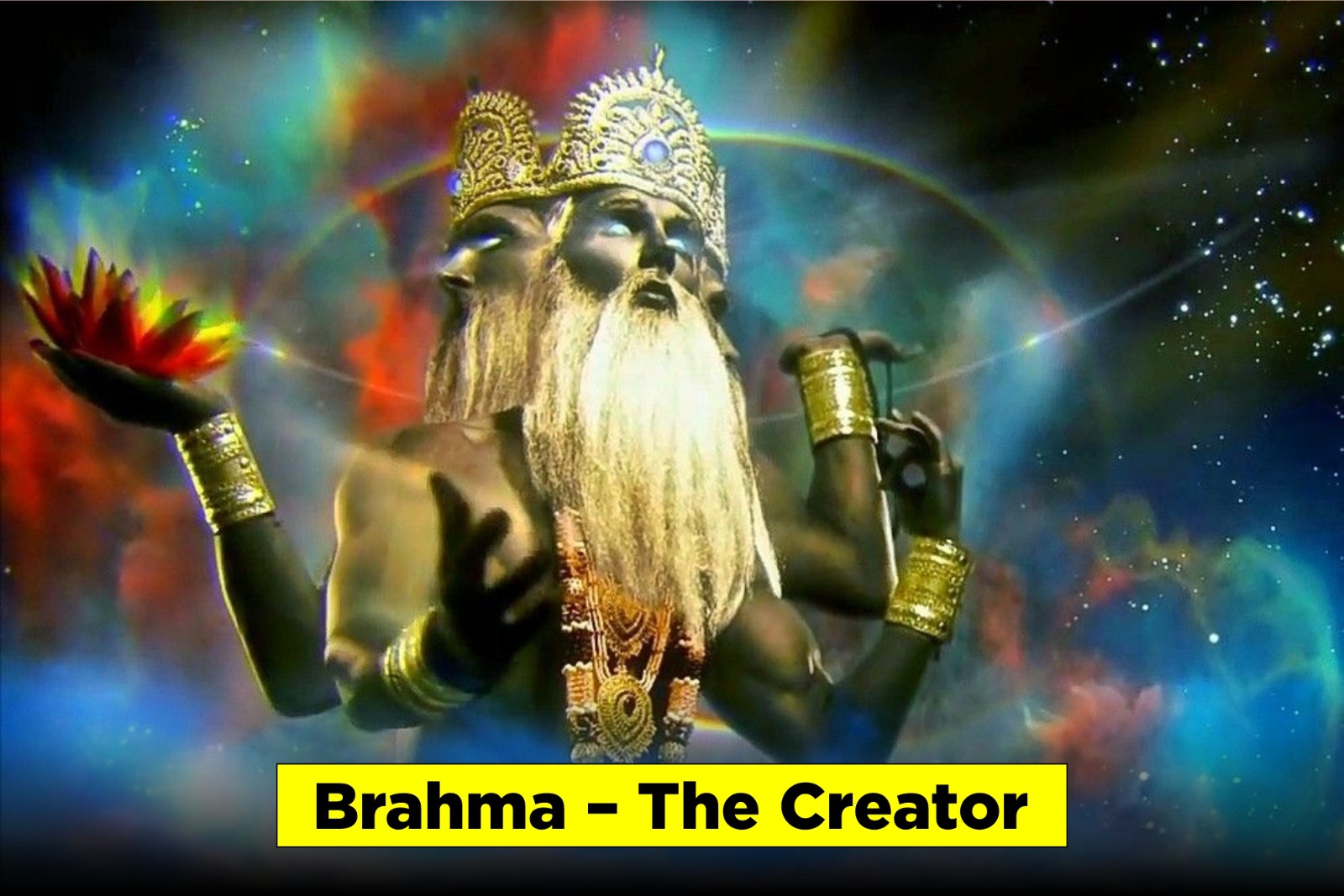
Brahma – The Creator Brahma – The Creator : When we think of— Brahma, Vishnu, and Shiva — most of us easily recall the divine roles: Vishnu the Preserver, Shiva the Destroyer. But Brahmadev, the Creator, somehow fades into the background. Isn't that surprising? The god who created the universe rarely finds a temple, a puja, or even a dedicated festival in his name. So who is Brahmadev, really? Brahmadev is believed to be the deity who created the universe, the elements, time, and even the gods themselves. He has four faces, each facing a direction, representing the four Vedas — Rig, Sama, Yajur, and Atharva. His beard signifies wisdom, and he holds in his hands a rosary (for time), a book (knowledge), a water pot (creation), and a lotus (purity). Why is he not widely worshipped? Different Puranas offer different reasons: In one tale, Brahma lies during a quest to find the top of Shiva's cosmic form. Because of this lie, Shiva curses him, saying he will not be worshipped on Earth. In another story, his desire for Saraswati is seen as morally questionable, leading to his fall from grace. Regardless of the reason, it’s a reminder that even creators are held accountable in the spiritual system of Dharma. Symbolism Beyond Form In deeper Vedantic philosophy, Brahma is not a god to be worshipped, but a symbol — of the creative force in the universe. Every time an idea is born, a poem is written, a child is born, or a seed becomes a tree, it is Brahma’s energy at play. In fact, many rishis say Brahman, the formless, infinite reality behind all creation, is the real source — and Brahma is its personified form in stories, making complex truths easier to grasp. In Conclusion Brahma may not have a big following, but his presence is everywhere. He is the silent spark behind every beginning. Maybe we don’t need grand temples for him — maybe honoring creativity, learning, and wisdom in our lives is the true worship of Brahma.
What is Adhyatma? A Hindu Perspective on the Inner Self What is Adhyatma? A Hindu Perspective on the Inner Self : In the Hindu philosophy, Adhyatma is a path, a purpose, and a powerful realisation. Deeply Rooted in the Vedas, explored in the Upanishads, and beautifully expressed in the Bhagavad Gita, Adhyatma is the journey inward — a path every Hindu is should walk. Meaning of Adhyatma in Hinduism The Sanskrit word Adhyātma (अध्यात्म) is made of: Adhi – meaning pertaining to or concerning Ātman – meaning soul, Self, or the innermost essence So, Adhyatma means — the practice of knowing, experiencing, and realizing the Ātman, which is nothing but a reflection of Brahman (the Supreme Reality). The Foundation: "You are not the body, you are the Atman." This is the timeless message in Hindu philosophy. From Upanishads to Bhagavad Gita, the rishis says: "Tat Tvam Asi" – you are that "Aham Brahmasmi" – I am Brahma(creator) The mahavakyas point to the truth that our real identity is not the body or mind, but the internal Atman — pure, blissful, untouched by birth and death. Adhyatma in the Bhagavad Gita Lord Krishna, explains Adhyatma in Chapter 8 of the Gita: "अधिभूतं क्षरो भावः पुरुषश्चाधिदैवतम्। अधियज्ञोऽहमेवात्र देहे देहभृतां वर" (BG 8.4) He explains that Adhyatma is the knowledge of the self (sva-bhāva) — understanding the nature of one's soul, which is beyond the body and changing world. Bhagwan Krishna urges Arjuna to go beyond the material and understand the eternal essence within — the real Adhyatma. Why is Adhyatma Essential in Hindu Dharma? Unlike many external rituals and customs, Adhyatma is about inner transformation. In Hinduism, it is the highest dharma — the spiritual responsibility of a human life. It helps us: Break free the cycle of birth and death (Sansara) Overcome ego, attachment, and illusion (Maya) Realize moksha, the ultimate liberation Adhyatma begins when you do, following steps with sincerity. 1. Daily Meditation (Dhyana) Sit in silence. Chant Om. Watch your breath. Patanjali Yoga Sutras says, “योगश्चित्तवृत्तिनिरोधः” — Adhyatma requires calm mind. 2. Satsang (Company of the Wise) Spend time in spiritual discussions or listen to discourses of enlightened saints. 3. Seva (Selfless Service) Offer service without expecting results. It purifies the heart. What Happens When You Walk the Path of Adhyatma? Peace becomes natural, even in chaos Your actions become selfless and pure You stop reacting — and start responding You realize: “I am not this body— I am the eternal Atman.” This is Moksha — the goal of every soul. Final Thought: Adhyatma is the Soul of Hindu Dharma In Hinduism, Adhyatma is not separate from life — it is life. It reminds us that behind every puja, mantra, yatra, or festival lies one deeper purpose — to connect with the divine within. So, whether you're reading the Gita, meditating in silence, or simply living with awareness — you're already walking the path of Adhyatma. In the temple of the heart, With the lamp of knowledge, Let us discover the divine light — our true Self. Adhyatma in Action: Living Spirituality in Daily Life When people hear the word Adhyatma, they often think of a monk in the Himalayas, doing deep meditation, or renunciation from the world. But the truth is, Adhyatma is not about escaping life — it is about engaging with life more deeply, more consciously. In today’s fast-paced world life is filled with deadlines, relationships, and responsibilities, but spirituality doesn’t need to be kept in a corner. It can become the very heart of how we live, work, speak, and connect. Adhyatma is Not a Separate Life — It’s a Deeper Way to Live This One In Hindu philosophy, Adhyatma says "relating to the self" — not just the ego or personality, but the true self, the Atman, which is eternal, peaceful, and divine. Living spiritually doesn’t require isolation — it requires awareness. And awareness can be practiced anywhere — while talking, working, eating, or even arguing. Adhyatma at Work: Karma Yoga in Action You don’t need to quit your job to walk a spiritual path. You need to change how you view your job. कर्मण्येवाधिकारस्ते मा फलेषु कदाचन मा कर्मफलहेतुर्भूर्मा ते सङ्गोऽस्त्वकर्मणि “Do your work, but don’t be attached to the result.” — Bhagavad Gita 2.47 This is Karma Yoga, one of the most powerful ways to live Adhyatma. Try this: Work sincerely, not to please the boss, but as an offering to the Divine. Don’t carry stress home — remember you are the doer of actions, not the owner of outcomes. Be honest, kind, and mindful — these are not just values, they are spiritual practices. Adhyatma in Relationships: See the Divine in Others In daily relationships, we often react out of ego, expectation, or hurt. But Adhyatma teaches us to look deeper. What if you saw the same Atman in your family, friends, and even difficult people? अहमात्मा गुडाकेश सर्वभूताशयस्थित: अहमादिश्च मध्यं च भूतानामन्त एव च “Ishvara exists in all beings.” — Bhagavad Gita 10.20 Try this: Listen more than you speak. Respond, don’t react. Forgive — not because they deserve it, but because you deserve peace. Adhyatma in Routine: Making the Mundane Sacred Brushing your teeth, making tea, commuting — we do these things on auto-pilot. But every act can be a meditation if done with full presence. Try this: Before meals, close your eyes and say “Thank you.” Do chores with joy, not irritation — they train patience and humility. Use moments of silence (like waiting in line) to take a breath and go within. This is the beauty of Hindu spiritual thought — nothing is ordinary when done with awareness. Adhyatma is Not a To-Do List — It’s a Way of Being You don’t need to always be chanting or meditation to be spiritual. You can be: Driving with calmness Eating with gratitude Arguing without ego Working with sincerity Loving without attachment This is Adhyatma in Action. Final Thought: Make Every Day Your Ashram You don’t need to be in an ashram to live spiritually. Your office, kitchen, local train — all can be places of inner growth, if you remember who you are. The real temple is within. The real guru is your conscience. The real prayer is presence. So walk the path. Not away from the world — but right through it, with your head high, heart soft, and soul awake.
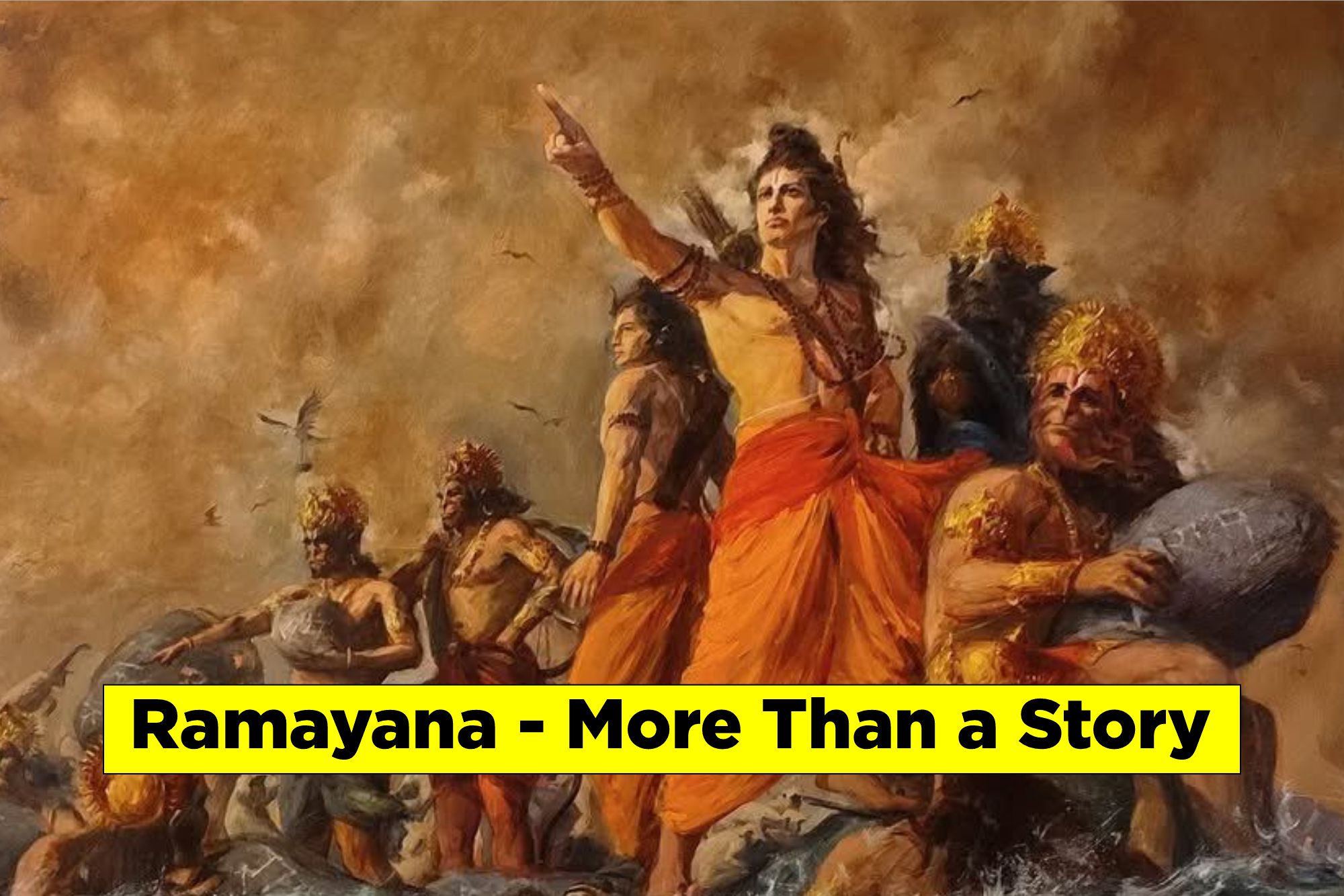
Ramayana – More Than a Story Have you ever wondered why the story of Lord Ram still lives in every Indian heart, generation after generation? Why do Ramleela plays still draw crowds? That’s the Ramayana — an epic; an emotional, moral, and spiritual guide that speaks to every Indian in its own way. What Makes the Ramayana So Special? Long before the tale of a prince who walked away from his throne, simply to keep his father’s word. That prince was Ram — not just a hero, but a symbol of dharma, maryada, and compassion. Written by Maharishi Valmiki, and divided into seven parts or Kands. From the joys of childhood to the hardships of exile, from the pain of separation to the glory of victory. Why Do We Still Read Ramayana Today? Because its characters aren’t just mythological figures — they are reflections of us. Ram, the ideal son and just king. Sita, the inner strength and grace. Hanuman, faith and energy. Lakshman, Bharat, and even Ravana — each with their unique role and lesson. These are not just names. They're ideals we all try to live by, in small ways — in our families, relationships, and society. A Story That Lives Everywhere You’ll find the Ramayana... Painted on the walls of temples in Tamil Nadu and Odisha Sung as bhajans in UP and Maharashtra Told as dance dramas in Bali and Thailand Celebrated through Dussehra, Diwali, and countless regional festivals And yes, it lives in our conscience, reminding us of the eternal tug-of-war between good and evil, ego and humility, truth and power. Ramayana Today – Not Just a Religious Epic. Even if you're not very spiritual, the Ramayana still speaks. It tells you: Stand by your values, even when it hurts. Respect relationships, not just roles. Let go of pride, or it will destroy you like it did Ravana. Final Thought Maybe that's why, even today, when we say "Ram Naam Satya Hai", we don’t just say it — we feel it. “Jo Ram ko laaye hai, hum unko laayein”
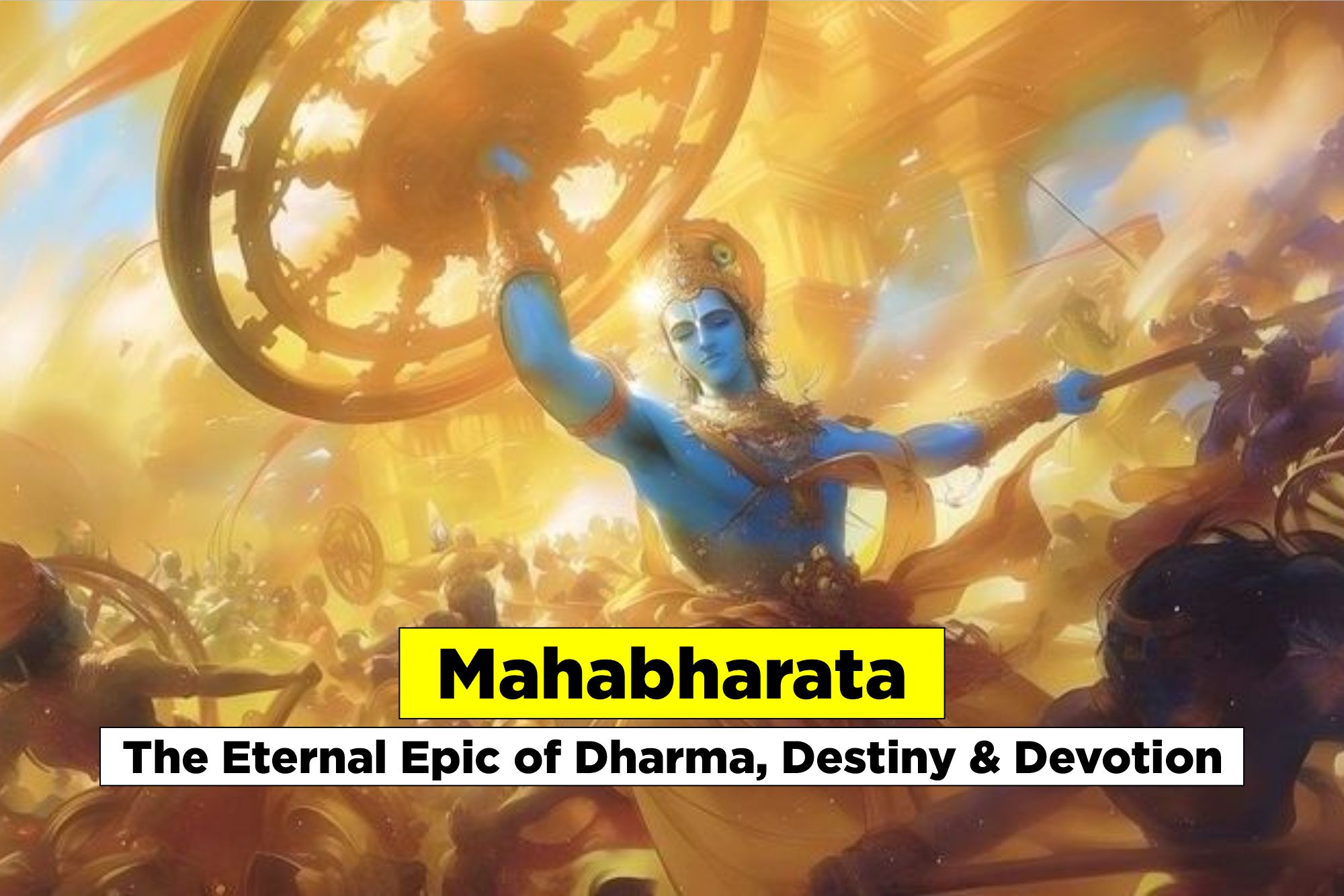
Mahabharata: The Eternal Epic of Dharma, Destiny and Devotion The Mahabharata is not a story of war. Composed by: Maharishi Ved Vyasa Language: Sanskrit Length: Over 1,00,000 verses Structure: 18 Parvas, with more than 200 sub-sections Also includes: The Bhagavad Gita, a crown jewel of spiritual wisdom Central Theme: The Struggle of Dharma Mahabharata explores Dharma (righteousness) — how complex, subtle, and difficult it can be to follow it in real life. Through the lives of kings, warriors, sages, queens, and commoners, it asks: What is the right action when duty conflicts with emotions? Is war justified for truth? How does one rise above ego and desire? The Core Story The Mahabharata tells the story of Kauravas and the Pandavas, of the Kuru dynasty. Main Characters: Yudhishthira: truth and righteousness Bhima: The strongest warrior Arjuna: main character of Bhagavad Gita Nakula & Sahadeva: Twins, wise and virtuous Draupadi: wife of the Pandavas, symbol of strength and dignity Krishna: Friend, guide, and divine charioteer of Arjuna Key Events The Dice Game: Pandavas lose their kingdom and Draupadi in a deceitful game. They go into 13 years of exile, including 1 year in disguise. The Forest Period: They meet sages, gain wisdom, and prepare for future battles. The Kurukshetra War: A massive war of 18 days where dharma and adharma clash. Ends with the destruction of almost the entire warrior class. The Bhagavad Gita: The Gita becomes a spiritual lighthouse for generations. Wisdom Beyond the War The Mahabharata is about awakening consciousness. It teaches: Dharma is complex — even the wise must think deeply. Power without humility leads to destruction. Forgiveness, inner strength, and surrender to God are the paths to peace. True wisdom lies in detachment and service. Legacy & Influence Read across India for centuries — in Sanskrit, Hindi, Marathi, Tamil, Bengali & more. Quoted by saints, leaders, and scholars for its philosophy and depth. Conclusion The Mahabharata is our story. Every human emotion, every life dilemma, every spiritual question is reflected in its pages.To read the Mahabharata is to walk through the battlefield of life — and emerge wiser, humbler, and closer to truth. “What is found in the Mahabharata may be found elsewhere, but what is not found here cannot be found anywhere.” — Mahabharata Adi Parva
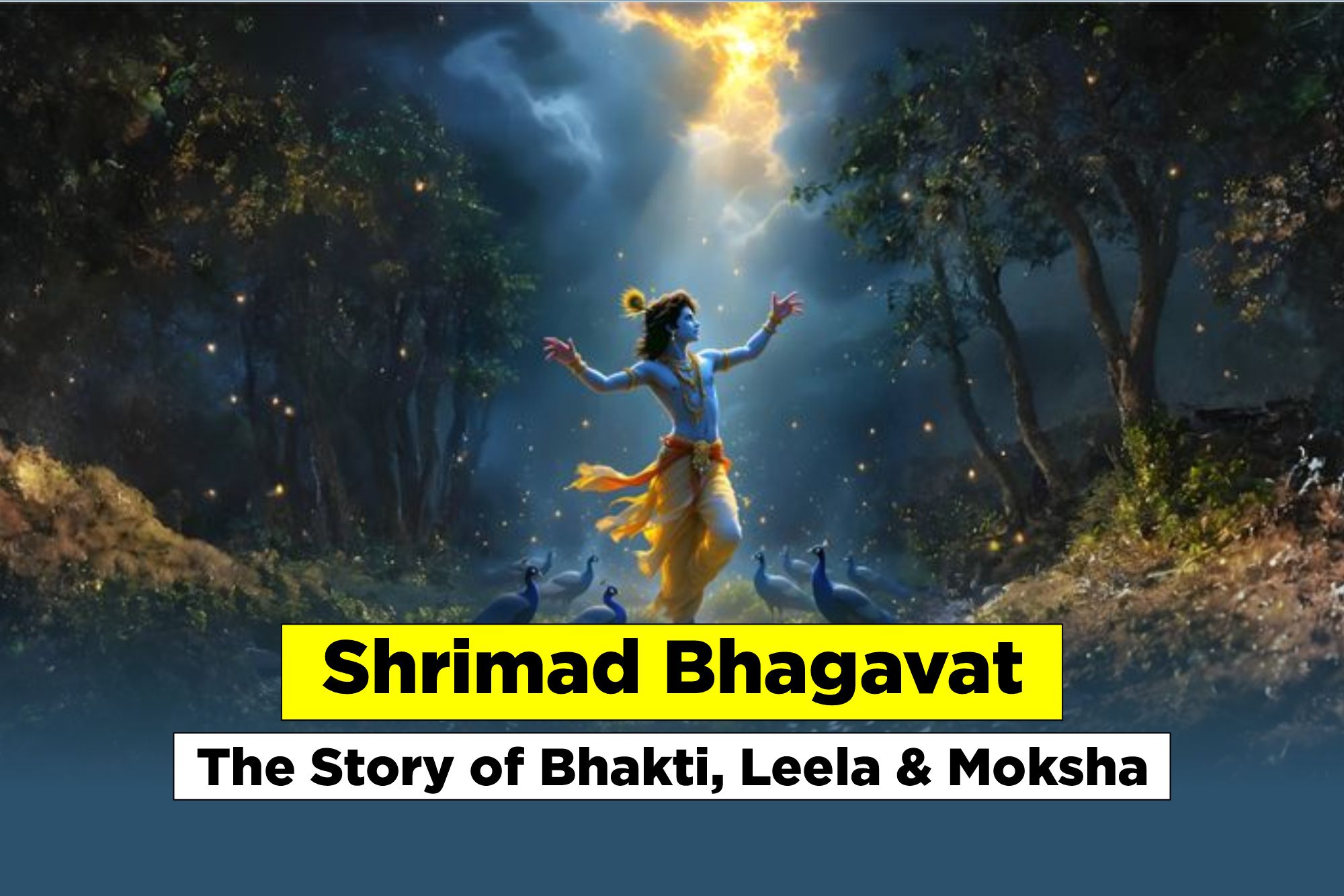
Shrimad Bhagavat : The Story of Bhakti, Leela and Moksha Shrimad Bhagavat: The Story of Bhakti, Leela and Moksha : The Shrimad Bhagavat is not just a scripture, it is the heart of devotion in Sanatan Dharma. It is the most beautiful expression of pure bhakti where stories touch the soul and teachings guide the seeker. What is the Shrimad Bhagavat? The Shrimad Bhagavat is one of the 18 Mahapuranas and is dedicated entirely to Bhagwan Vishnu and his incarnations, especially Shri Krishna. Composed by: Sage Ved Vyasa Language: Sanskrit Verses: Over 18,000 shlokas Structure: Divided into 12 Cantos (Skandhas) It is not a dry philosophical book, but a living river of divine stories, songs, and wisdom. Key Themes of the Bhagavat 1. Bhakti is Supreme The Bhagavat teaches that in the Kaliyuga, the simplest and most effective path to Moksha (liberation) is devotion to God — especially through hearing, chanting, and remembering His name. 2. Leela (Divine Play of God) The text contains Krishna Leela — the childhood, youth, and divine acts of Bhagwan Krishna that fill the heart with love and awe. 3. Moksha (Liberation) The Shrimad Bhagavat shows that loving God without desire for reward leads to the highest bliss and freedom from the cycle of birth and death. Highlights from the 12 Skandhas (Cantos) Skandha Summary 1 Introduction, birth of Parikshit, Vyasa's restlessness, Narada's guidance 2 Description of cosmic form (Virat Purusha), beginnings of creation 3 Story of Kapila Muni and Devahuti — Sankhya philosophy 4 Stories of Dhruva and King Prithu 5 Tale of King Rishabhdev and his son Bharat 6 Salvation of Ajamila through “Narayan” naam 7 Story of Prahlad and Narasimha Avatar 8 Vamana Avatar, churning of the ocean (Samudra Manthan) 9 Genealogies of kings, birth of Lord Rama 10 Krishna Leela — birth, childhood, Ras Leela, killing of Kansa, Dwaraka 11 Uddhava Gita — Krishna’s final teachings before leaving Earth 12 Kaliyuga’s characteristics, closing prophecies and moksha path The Power of Listening The Bhagavat emphasizes Shravan — the act of listening to stories of God with love and faith. It is believed ]by listening to Shrimad Bhagavat, one can cleanse their mind, awaken bhakti, and attain liberation. “Sravanam kirtanam Visnoh smaranam…” — (Bhagavat 7.5.23) The nine forms of devotion begin with listening to stories of God. Saints like Tulsidas, Chaitanya Mahaprabhu, Vallabhacharya, and others drew deep inspiration from it. Today, people host Bhagavat Saptah — for spiritual growth, peace, or memory of a loved one. Relevance in Modern Life In a world full of stress and materialism, the Bhagavat brings us back to the simplicity of love and surrender. Its stories teach us to: Live with compassion (like Krishna) Serve parents and guru (like Dhruva) Chant the Divine Name with faith (like Ajamila) Stay humble and loving in devotion “Krishna’s pastimes are not mythology — they are the doorway to spiritual joy.”
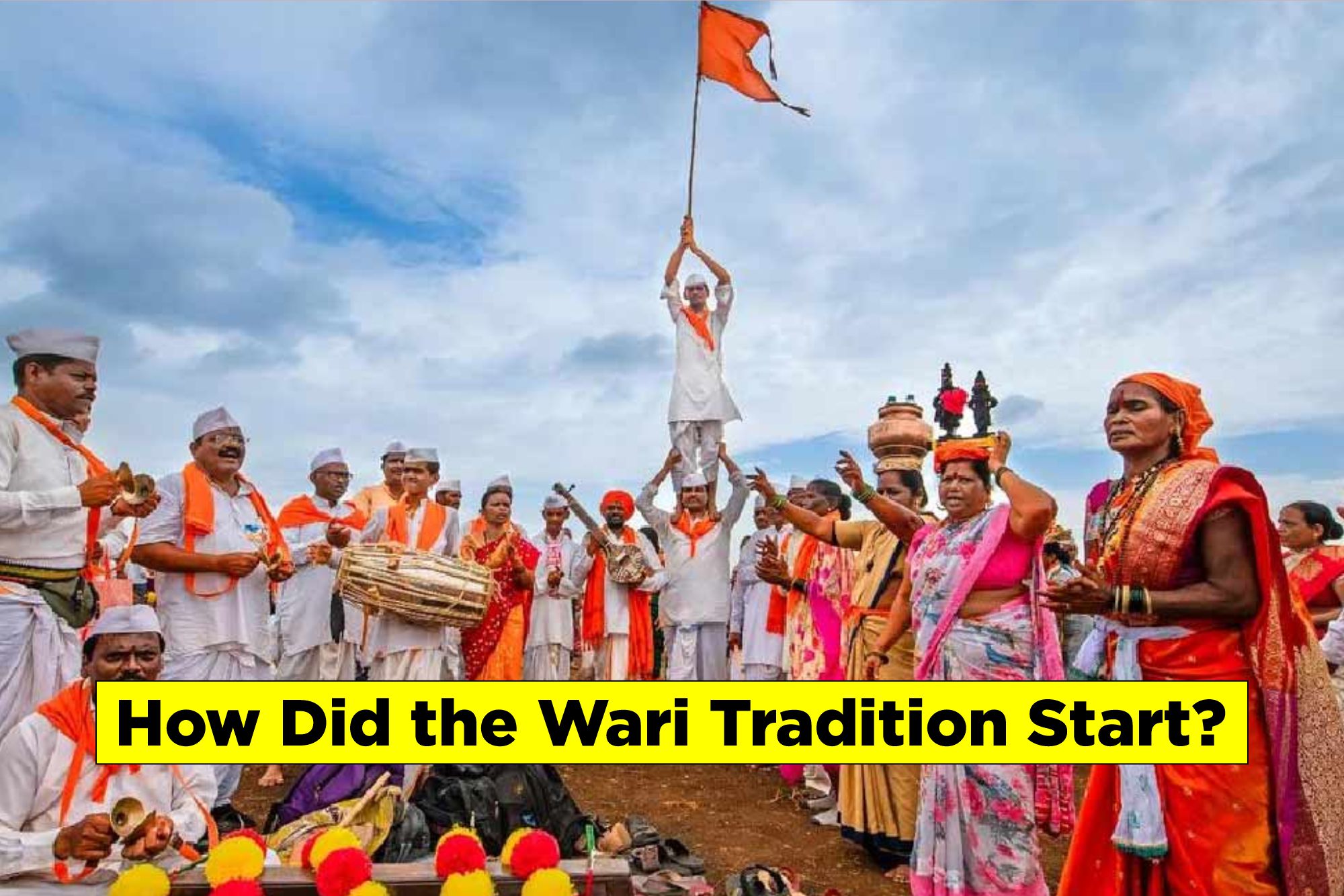
How Did the Wari Tradition Start? The Wari tradition, also called Vari Parampara, is one of the oldest and most beautiful pilgrimages in India. It is over 700 years old and is still followed with the same love and devotion today. It all began with Sant Dnyaneshwar. In the 13th century, Sant Dnyaneshwar, a young saint and poet from Maharashtra, became very popular for his spiritual wisdom and deep love for Lord Vitthal (Vithoba) of Pandharpur. After his death at a young age, his followers wanted to continue remembering him and his teachings. So they started carrying a symbolic palkhi (palanquin) with his paduka (holy footprints) from Alandi (his samadhi place) to Pandharpur, especially during the Ashadhi Ekadashi festival. Then came Sant Tukaram, another great saint. In the 17th century, Sant Tukaram from Dehu also became a famous Warkari saint. His songs (abhangas) full of love and devotion for Vitthal touched the hearts of thousands. After his death, his followers started another palkhi from Dehu to Pandharpur. So now, the two main palkhis – one from Alandi (Sant Dnyaneshwar) and one from Dehu (Sant Tukaram) – travel to Pandharpur every year during the monsoon season. Why is the Wari special? The journey is not just about walking. It’s about walking together, singing, praying, and showing love for God. The people who walk are called Warkaris. They believe in simplicity, equality, and helping each other. They walk for days, barefoot, in sun and rain, just to reach their beloved Vitthal standing in the Pandharpur temple with arms wide open. A tradition of love and devotion What started as a tribute to saints has now become a living tradition of devotion, unity, and service. Today, millions of people join the Wari every year, not because someone forces them, but because their hearts pull them to Vitthal.