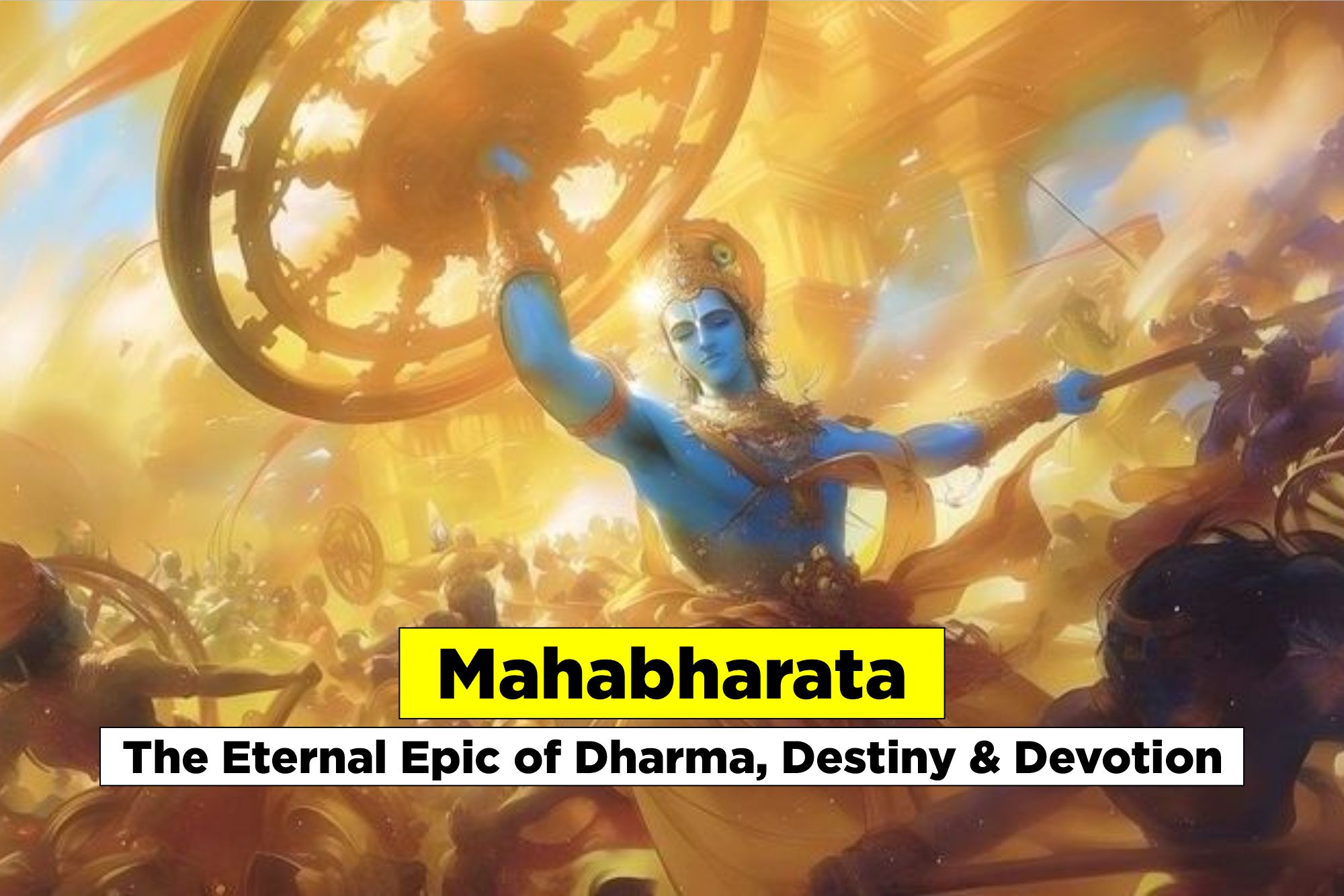
Mahabharata: The Eternal Epic of Dharma, Destiny and Devotion The Mahabharata is not a story of war. Composed by: Maharishi Ved Vyasa Language: Sanskrit Length: Over 1,00,000 verses Structure: 18 Parvas, with more than 200 sub-sections Also includes: The Bhagavad Gita, a crown jewel of spiritual wisdom Central Theme: The Struggle of Dharma Mahabharata explores Dharma (righteousness) — how complex, subtle, and difficult it can be to follow it in real life. Through the lives of kings, warriors, sages, queens, and commoners, it asks: What is the right action when duty conflicts with emotions? Is war justified for truth? How does one rise above ego and desire? The Core Story The Mahabharata tells the story of Kauravas and the Pandavas, of the Kuru dynasty. Main Characters: Yudhishthira: truth and righteousness Bhima: The strongest warrior Arjuna: main character of Bhagavad Gita Nakula & Sahadeva: Twins, wise and virtuous Draupadi: wife of the Pandavas, symbol of strength and dignity Krishna: Friend, guide, and divine charioteer of Arjuna Key Events The Dice Game: Pandavas lose their kingdom and Draupadi in a deceitful game. They go into 13 years of exile, including 1 year in disguise. The Forest Period: They meet sages, gain wisdom, and prepare for future battles. The Kurukshetra War: A massive war of 18 days where dharma and adharma clash. Ends with the destruction of almost the entire warrior class. The Bhagavad Gita: The Gita becomes a spiritual lighthouse for generations. Wisdom Beyond the War The Mahabharata is about awakening consciousness. It teaches: Dharma is complex — even the wise must think deeply. Power without humility leads to destruction. Forgiveness, inner strength, and surrender to God are the paths to peace. True wisdom lies in detachment and service. Legacy & Influence Read across India for centuries — in Sanskrit, Hindi, Marathi, Tamil, Bengali & more. Quoted by saints, leaders, and scholars for its philosophy and depth. Conclusion The Mahabharata is our story. Every human emotion, every life dilemma, every spiritual question is reflected in its pages.To read the Mahabharata is to walk through the battlefield of life — and emerge wiser, humbler, and closer to truth. “What is found in the Mahabharata may be found elsewhere, but what is not found here cannot be found anywhere.” — Mahabharata Adi Parva
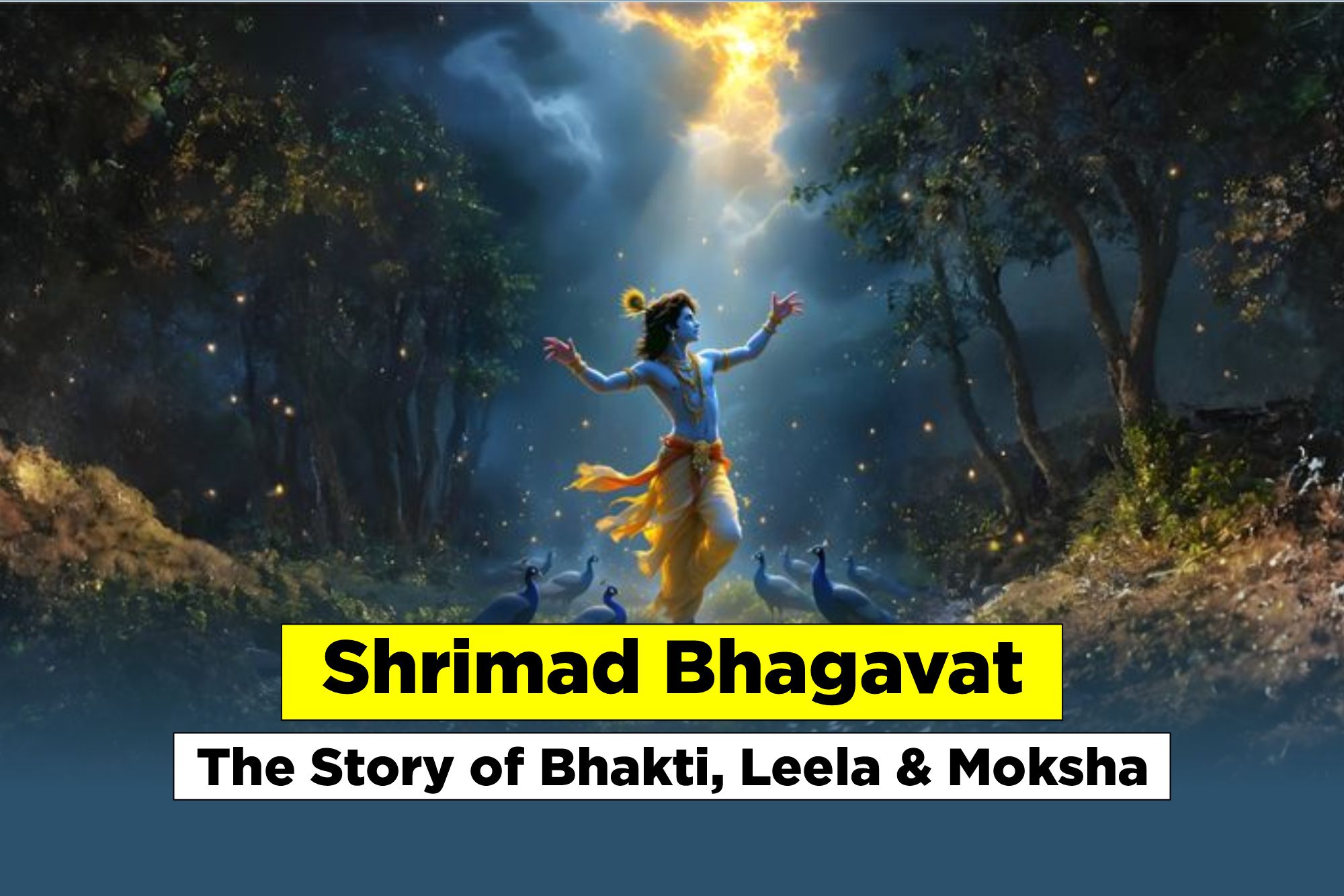
Shrimad Bhagavat : The Story of Bhakti, Leela and Moksha Shrimad Bhagavat: The Story of Bhakti, Leela and Moksha : The Shrimad Bhagavat is not just a scripture, it is the heart of devotion in Sanatan Dharma. It is the most beautiful expression of pure bhakti where stories touch the soul and teachings guide the seeker. What is the Shrimad Bhagavat? The Shrimad Bhagavat is one of the 18 Mahapuranas and is dedicated entirely to Bhagwan Vishnu and his incarnations, especially Shri Krishna. Composed by: Sage Ved Vyasa Language: Sanskrit Verses: Over 18,000 shlokas Structure: Divided into 12 Cantos (Skandhas) It is not a dry philosophical book, but a living river of divine stories, songs, and wisdom. Key Themes of the Bhagavat 1. Bhakti is Supreme The Bhagavat teaches that in the Kaliyuga, the simplest and most effective path to Moksha (liberation) is devotion to God — especially through hearing, chanting, and remembering His name. 2. Leela (Divine Play of God) The text contains Krishna Leela — the childhood, youth, and divine acts of Bhagwan Krishna that fill the heart with love and awe. 3. Moksha (Liberation) The Shrimad Bhagavat shows that loving God without desire for reward leads to the highest bliss and freedom from the cycle of birth and death. Highlights from the 12 Skandhas (Cantos) Skandha Summary 1 Introduction, birth of Parikshit, Vyasa's restlessness, Narada's guidance 2 Description of cosmic form (Virat Purusha), beginnings of creation 3 Story of Kapila Muni and Devahuti — Sankhya philosophy 4 Stories of Dhruva and King Prithu 5 Tale of King Rishabhdev and his son Bharat 6 Salvation of Ajamila through “Narayan” naam 7 Story of Prahlad and Narasimha Avatar 8 Vamana Avatar, churning of the ocean (Samudra Manthan) 9 Genealogies of kings, birth of Lord Rama 10 Krishna Leela — birth, childhood, Ras Leela, killing of Kansa, Dwaraka 11 Uddhava Gita — Krishna’s final teachings before leaving Earth 12 Kaliyuga’s characteristics, closing prophecies and moksha path The Power of Listening The Bhagavat emphasizes Shravan — the act of listening to stories of God with love and faith. It is believed ]by listening to Shrimad Bhagavat, one can cleanse their mind, awaken bhakti, and attain liberation. “Sravanam kirtanam Visnoh smaranam…” — (Bhagavat 7.5.23) The nine forms of devotion begin with listening to stories of God. Saints like Tulsidas, Chaitanya Mahaprabhu, Vallabhacharya, and others drew deep inspiration from it. Today, people host Bhagavat Saptah — for spiritual growth, peace, or memory of a loved one. Relevance in Modern Life In a world full of stress and materialism, the Bhagavat brings us back to the simplicity of love and surrender. Its stories teach us to: Live with compassion (like Krishna) Serve parents and guru (like Dhruva) Chant the Divine Name with faith (like Ajamila) Stay humble and loving in devotion “Krishna’s pastimes are not mythology — they are the doorway to spiritual joy.”