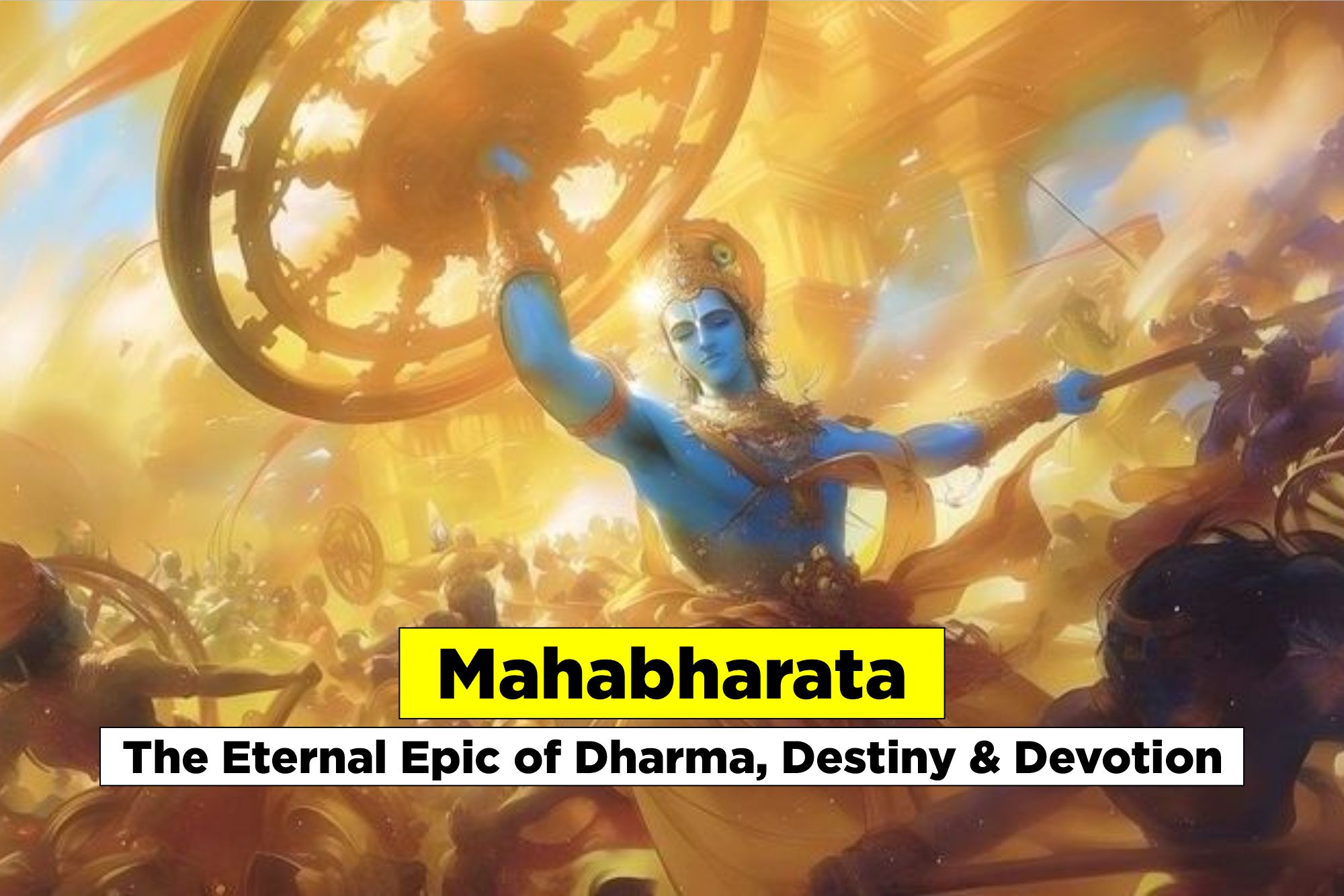
Mahabharata: The Eternal Epic of Dharma, Destiny and Devotion The Mahabharata is not a story of war. Composed by: Maharishi Ved Vyasa Language: Sanskrit Length: Over 1,00,000 verses Structure: 18 Parvas, with more than 200 sub-sections Also includes: The Bhagavad Gita, a crown jewel of spiritual wisdom Central Theme: The Struggle of Dharma Mahabharata explores Dharma (righteousness) — how complex, subtle, and difficult it can be to follow it in real life. Through the lives of kings, warriors, sages, queens, and commoners, it asks: What is the right action when duty conflicts with emotions? Is war justified for truth? How does one rise above ego and desire? The Core Story The Mahabharata tells the story of Kauravas and the Pandavas, of the Kuru dynasty. Main Characters: Yudhishthira: truth and righteousness Bhima: The strongest warrior Arjuna: main character of Bhagavad Gita Nakula & Sahadeva: Twins, wise and virtuous Draupadi: wife of the Pandavas, symbol of strength and dignity Krishna: Friend, guide, and divine charioteer of Arjuna Key Events The Dice Game: Pandavas lose their kingdom and Draupadi in a deceitful game. They go into 13 years of exile, including 1 year in disguise. The Forest Period: They meet sages, gain wisdom, and prepare for future battles. The Kurukshetra War: A massive war of 18 days where dharma and adharma clash. Ends with the destruction of almost the entire warrior class. The Bhagavad Gita: The Gita becomes a spiritual lighthouse for generations. Wisdom Beyond the War The Mahabharata is about awakening consciousness. It teaches: Dharma is complex — even the wise must think deeply. Power without humility leads to destruction. Forgiveness, inner strength, and surrender to God are the paths to peace. True wisdom lies in detachment and service. Legacy & Influence Read across India for centuries — in Sanskrit, Hindi, Marathi, Tamil, Bengali & more. Quoted by saints, leaders, and scholars for its philosophy and depth. Conclusion The Mahabharata is our story. Every human emotion, every life dilemma, every spiritual question is reflected in its pages.To read the Mahabharata is to walk through the battlefield of life — and emerge wiser, humbler, and closer to truth. “What is found in the Mahabharata may be found elsewhere, but what is not found here cannot be found anywhere.” — Mahabharata Adi Parva
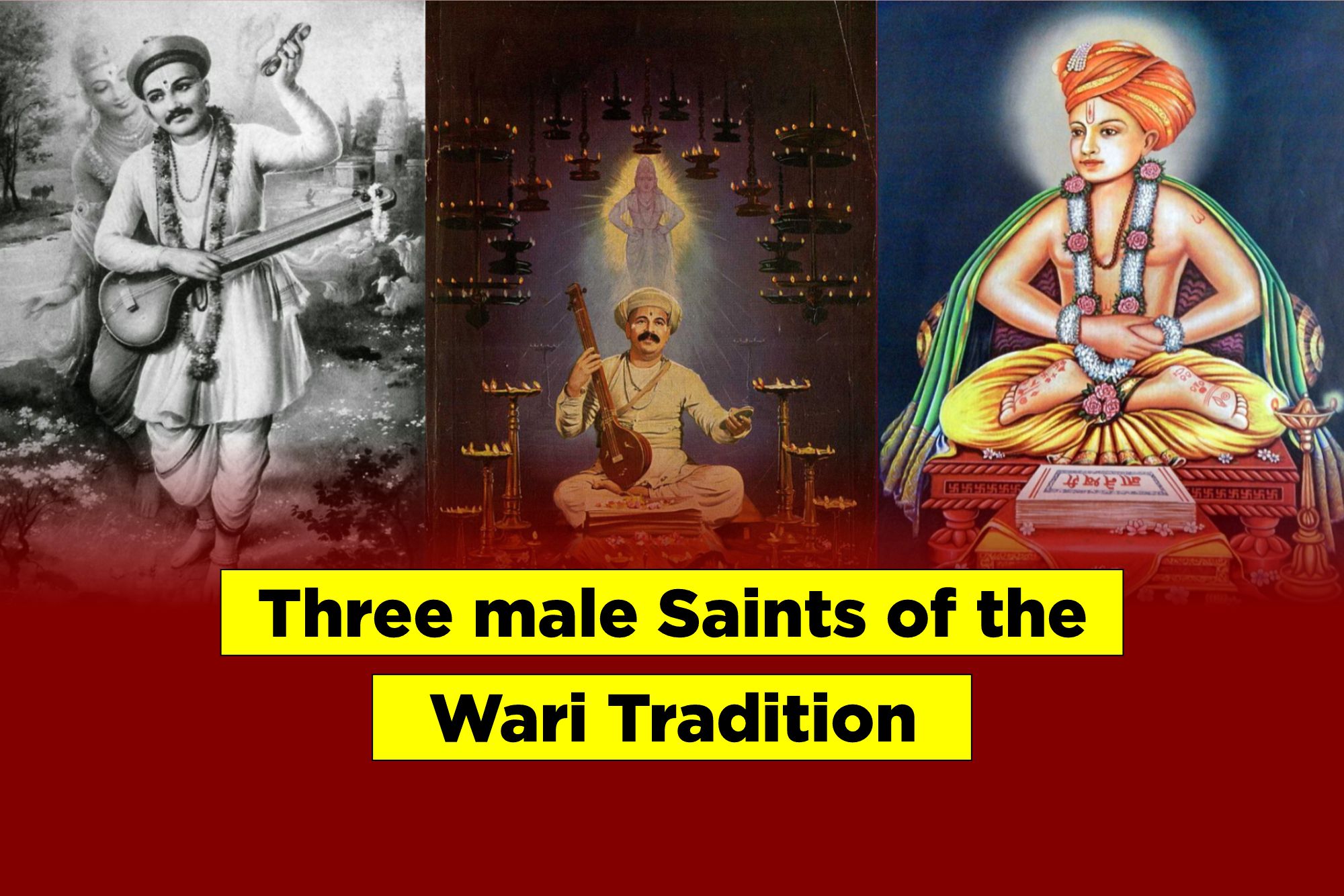
Three male Saints of the Wari Tradition The Wari tradition is not just about walking it is about following the path of bhakti (devotion) shown by great saints who taught love, equality, and surrender to God. Here are three saints who played a major role in shaping this beautiful tradition: 1. Sant Dnyaneshwar Place: Alandi Period: 13th century Sant Dnyaneshwar was a child saint and philosopher who wrote the famous Dnyaneshwari, a Marathi explanation of the Bhagavad Gita. Even at a young age, he showed deep wisdom and compassion. He believed that God is within everyone, and all humans are equal. After he took samadhi (conscious death) in Alandi, his followers began carrying his paduka (holy sandals) in a palkhi (palanquin) to Pandharpur every year. 2. Sant Tukaram Place: Dehu Period: 17th century Sant Tukaram was a farmer and poet-saint who wrote thousands of abhangas (devotional poems) in praise of Vitthal. His poems were simple, emotional, and full of love for God. After his death, his followers began another palkhi from Dehu to Pandharpur, which is now one of the biggest parts of the Wari. 3. Sant Namdev Place: Narsi (in Maharashtra), later Punjab Period: 13th–14th century Sant Namdev was a saint-poet who travelled across India spreading the message of love for God and equality among people. Namdev used to perform kirtans (devotional singing) in front of the Vitthal temple in Pandharpur. His bhakti was pure and filled with emotion, inspiring many others to follow the path of devotion. Legacy of These Saints These saints didn’t just talk about God; they lived a life full of love, service, simplicity, and truth. Their teachings still guide millions of Warkaris today who walk to Pandharpur every year with their names on their lips and faith in their hearts.